
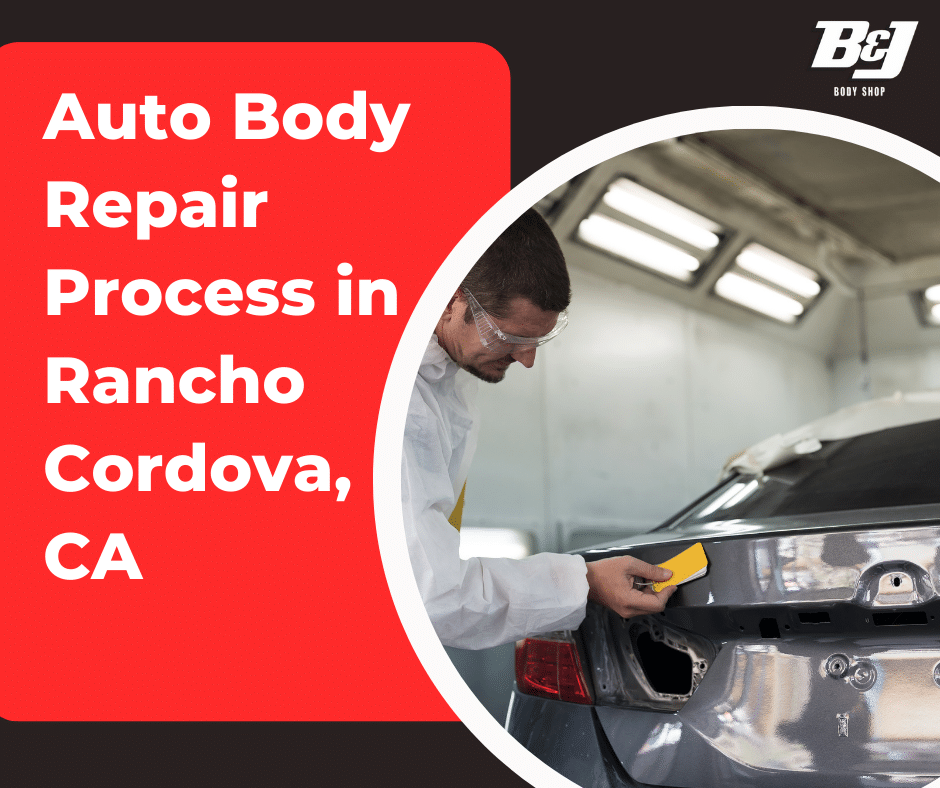
If you’ve just been in a crash (or even a minor fender bender), one of the most frustrating parts isn’t just the damage—it’s the uncertainty:
- What happens next?
- How long will repairs take?
- What will the estimate actually include?
- Will my insurance force me to use a specific shop?
You’re not alone. Most people don’t go through collision repairs often, and the process can feel like a black box.
This guide walks you through the auto body repair process in Rancho Cordova, CA from start to finish, including what affects cost, common delays, parts comparisons (OEM vs aftermarket), and the questions you should ask so you can feel confident about your repair decision.
Quick answer: What are the steps in the auto body repair process?
The typical auto body repair process includes an estimate, disassembly/blueprinting, parts ordering, structural/body repairs, paint/refinishing, reassembly, quality checks, and delivery. Timeline and cost depend on damage severity, parts availability, and insurance approvals.
Step-by-Step: The Auto Body Repair Process (What to Expect)
A quality repair is more than making the car look “normal” again. It’s about restoring safety, function, and finish.
Here’s the process most reputable shops follow, including B&J Body Shop in Rancho Cordova:
| Step | What Happens | Why It Matters to You |
| 1) Vehicle check-in | Photos, initial inspection, damage notes | Creates documentation and sets expectations |
| 2) Estimate | Visible damage is assessed and written up | Helps you understand scope and likely cost drivers |
| 3) Disassembly + blueprinting | Panels/parts may be removed to find hidden damage | Reduces surprises later and improves accuracy |
| 4) Insurance coordination | Repairs are approved and supplements submitted if needed | Prevents delays and keeps everyone aligned |
| 5) Parts sourcing | OEM/aftermarket options evaluated; parts ordered | Parts choices affect fit, cost, and timeline |
| 6) Structural/body repairs | Frame/unibody alignment and panel repair/replacement | Restores safety and correct vehicle geometry |
| 7) Paint + refinishing | Prep, paint match, spray, cure, finish | Restores appearance and protects from corrosion |
| 8) Reassembly | Components, trim, lights, sensors reinstalled | Ensures everything fits and functions properly |
| 9) Quality control | Final checks, test drive (when applicable), detailing | Catches issues before you get the keys |
| 10) Delivery | Walk-through, care guidance, final paperwork | You leave knowing what was done and why |
If you want a quick overview of services involved in this process, start with B&J’s services
Cost/Price: What Impacts Auto Body Repair Cost in Rancho Cordova, CA?
No honest shop can quote a universal price without seeing the vehicle—because collision repair cost depends on what’s damaged and what’s hidden behind what you can see.
Here are the biggest cost drivers:
| Cost Driver | Why It Affects Price | What You Can Do |
| Severity of impact | More damaged components = more labor and parts | Get a thorough inspection, not a “quick glance” |
| Hidden damage | Internal brackets, mounts, and supports may be bent | Ask if the shop performs blueprinting/disassembly |
| Parts type | OEM vs aftermarket vs recycled affects price and fit | Ask for the parts options and tradeoffs |
| Paint work complexity | Blending and color matching takes skill/time | Ask how color match is verified |
| Advanced systems | Sensors/cameras may need recalibration | Confirm the shop checks safety systems post-repair |
| Insurance approvals | Supplements can add time | Choose a shop that communicates clearly with insurance |
Transparent expectation-setting
If your estimate changes after teardown, it’s not automatically a red flag. Hidden damage is common. A good shop documents it clearly and explains what’s changing—and why.
For help with a repair plan, you can request an estimate through B&J’s free estimate.
Problems/Negatives: Common Challenges (and How to Avoid Headaches)
Here are the most common “pain points” in the collision repair process—and what you should know up front.
| Common Problem | Why It Happens | How to Reduce the Risk |
| Delays from parts | Parts shortages/backorders, shipping delays | Ask early about parts availability and alternatives |
| Estimate changes | Hidden damage is found after disassembly | Choose a shop that blueprints early |
| Paint mismatch concerns | Lighting, blending, and color formulas vary | Ask how paint match and blending are handled |
| Miscommunication | Insurance + shop + customer info gets messy | Ask how often you’ll receive updates |
| “Looks fixed” but does not drive right | Alignment/suspension/ADAS issues can be missed | Confirm quality control and system checks |
A customer-first tip
Ask the shop: “What’s the most common reason repairs take longer than expected?”
An honest answer here tells you a lot about transparency.
Comparisons: OEM vs Aftermarket vs Recycled Parts (Fair Breakdown)
Parts are one of the biggest variables in both cost and repair quality. Here’s a clear comparison:
| Parts Type | What It Means | Pros | Cons | Best For |
| OEM (Original Equipment) | Made by the vehicle manufacturer | Typically best fit and finish consistency | Often higher cost | Newer vehicles, fit-critical repairs |
| Aftermarket | Made by third-party manufacturers | Can cost less | Fit/finish can vary by brand and panel | Budget-sensitive repairs (case-by-case) |
| Recycled/Used (LKQ) | Salvage/used OEM parts | Can balance cost + OEM fit | Condition varies; availability depends | Certain panels/components when quality is verified |
Bottom line: There isn’t one “best” option for every repair. The best choice depends on damage location, safety requirements, vehicle age, and what you value most (fit, cost, speed).
If you want to read about vehicle safety research and crashworthiness, the Insurance Institute for Highway Safety (IIHS) is a strong consumer resource.
Best-Of List: The Best Questions to Ask Before You Authorize Repairs
These questions protect you as a customer (and usually improve outcomes):
- Will you disassemble/blueprint before finalizing the repair plan?
- What parts are you recommending (OEM/aftermarket/recycled), and why?
- How will you keep me updated—and how often?
- What’s the most common delay you’re seeing right now?
- How do you verify the repair is safe—not just “pretty”?
Here’s a quick “save and send” checklist:
| Question | Why It Matters |
| Will you identify hidden damage early? | Prevents timeline surprises |
| What parts are being used? | Affects fit, durability, and cost |
| How is paint match verified? | Reduces mismatch concerns |
| What quality checks are done before delivery? | Helps ensure safe, complete repair |
| What paperwork will I receive? | Helps with resale, warranty, and future claims |
Reviews/Industry Confidence: What Matters More Than “5 Stars”
Online reviews are helpful, but collision repair is technical—so focus on the signals that show a shop repairs responsibly:
- Training and repair standards (look for recognized programs and ongoing education)
- A documented process (blueprinting, quality control steps, transparency)
- Clear communication (updates, explanation of supplements, parts choices)
- Willingness to explain tradeoffs (not just push the cheapest route)
For industry training standards, I-CAR is one of the most widely recognized organizations in collision repair education.
Your Rights: Can Insurance Make You Use a Certain Shop?
In California, you generally have the right to choose your repair facility. If you ever feel pressured, it’s worth reviewing consumer guidance from the California Department of Insurance
A good shop will work with your insurance—but still advocate for a safe, complete repair.
Why Rancho Cordova Drivers Choose B&J Body Shop
When you want the repair done right, the process matters as much as the tools.
If you’re comparing shops, it helps to learn who you’re working with—see about B&J Body Shop and how the team approaches repairs.
And if the damage is more than cosmetic, explore collision repair services for the bigger-picture side of restoration.
FAQs About Auto Body Repair in Rancho Cordova, CA
Q: How much does auto body repair cost in Rancho Cordova, CA?
A: Cost depends on damage severity, hidden damage, parts type (OEM/aftermarket/recycled), paint work needed, and insurance approvals.
Q: How long does the auto body repair process take in Rancho Cordova, CA?
A: Timelines vary by damage and parts availability. Minor repairs may take days, while larger collisions can take longer—especially if parts are backordered or supplements are needed.
Q: Can I choose my own body shop in Rancho Cordova, CA if I’m using insurance?
A: In most cases, yes. California consumers generally have the right to choose their repair facility—check the California Department of Insurance for guidance.
Q: What’s the difference between collision repair and auto body repair?
A: Auto body repair often focuses on panels/paint/cosmetic restoration, while collision repair may include structural repairs, safety system checks, and more extensive rebuilding.
Q: Should I choose OEM parts for collision repair?
A: OEM parts are often preferred for fit and consistency, but the best choice depends on your vehicle, repair area, budget, and available alternatives.
For safety and recall info, you can also check the National Highway Traffic Safety Administration (NHTSA).
Ready for a Clear, Transparent Repair Plan?
If you want a shop that walks you through the process, explains options honestly, and keeps you updated, we’re here to help.
✅ Request a free estimate or contact B&J Body Shop
✅ Explore auto body repair services in Rancho Cordova, CA